Pain that travels from your lower back down your leg is different from typical back pain. It can make simple activities like walking, sitting for long periods, climbing stairs, or even sleeping uncomfortable. If left untreated, the pain may gradually interfere with your daily routine and affect your overall quality of life.
Sciatica is one of the most common causes of radiating leg pain and usually occurs when the sciatic nerve is irritated or compressed. While the symptoms can be alarming, many people find relief with the right diagnosis and timely treatment. The best approach depends on the underlying cause and the severity of the condition.
If you’re wondering what sciatica is, why it happens, what symptoms to watch for, and which treatment options can help, this guide will answer your questions. You’ll also learn how sciatica is diagnosed, when surgery may be considered, simple ways to prevent future episodes, and when it’s important to consult a spine specialist.
What Is Sciatica?
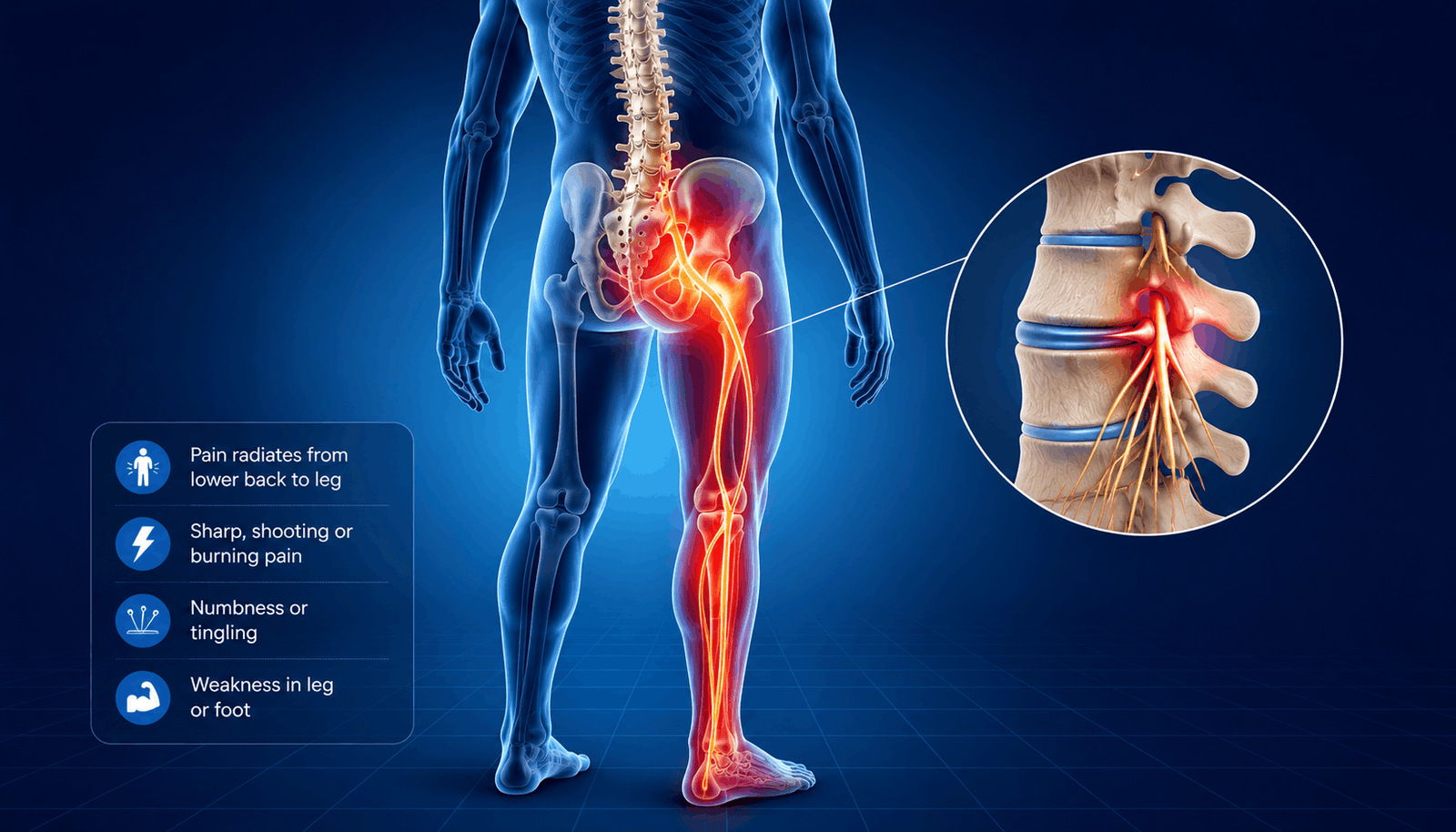 Sciatica is a condition that occurs when the sciatic nerve becomes irritated or compressed. The sciatic nerve is the largest and longest nerve in the human body, running from the lower back through the buttocks and into each leg. When this nerve is affected, it can cause pain that travels along its path.
Unlike regular back pain, sciatica usually affects one side of the body. The pain may start in the lower back or buttock and radiate down the leg. Some people also experience tingling, numbness, or muscle weakness in the affected leg.
Sciatica is not a disease but a symptom of an underlying spinal condition, such as a herniated disc or spinal stenosis. Identifying the underlying cause is important to determine the most effective treatment and long-term relief.
Symptoms of Sciatica
The symptoms of sciatica depend on the severity of nerve irritation or compression. Most people experience symptoms on one side of the body. The most common symptom is pain that starts in the lower back or buttock and radiates down the leg. Depending on the severity of the condition, you may also experience tingling, numbness, muscle weakness, or pain that worsens after prolonged sitting, coughing, or sudden movements.
Common Symptoms of Sciatica:
- Pain that radiates from the lower back to the buttock and down one leg
- Sharp, burning, or shooting pain
- Tingling or a “pins and needles” sensation
- Numbness in the leg or foot
- Muscle weakness in the affected leg
- Pain that worsens with prolonged sitting, coughing, or sneezing
- Difficulty walking or standing for long periods
These symptoms may range from mild discomfort to severe pain and can worsen with sitting, bending, or sudden movements. If they persist or interfere with daily activities, consult a doctor for proper evaluation.
What Causes Sciatica?
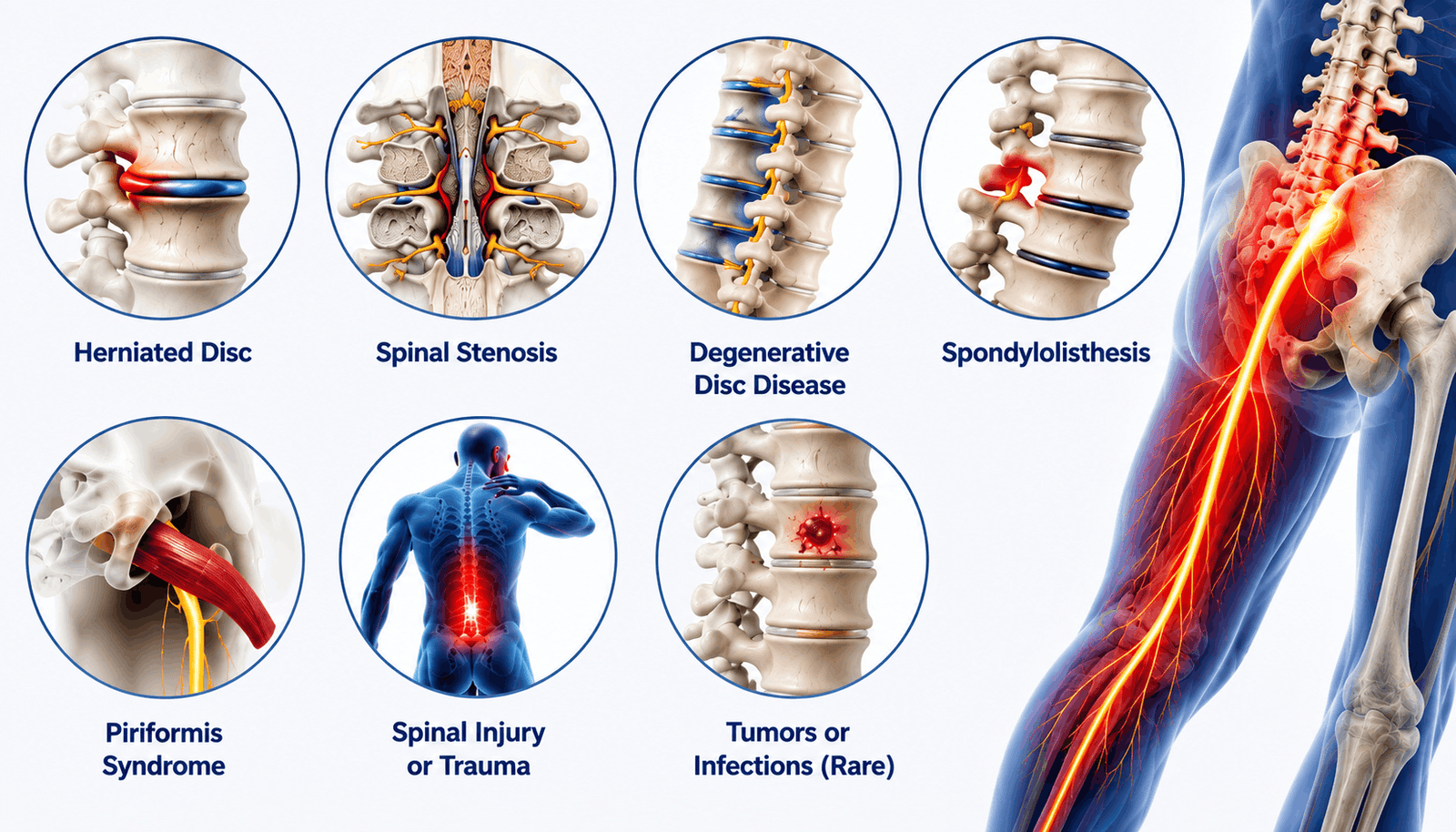 Sciatica develops when the sciatic nerve is irritated or compressed, often due to a problem in the lower spine. Several conditions can put pressure on the nerve, leading to pain, numbness, tingling, or weakness that radiates down the leg. Identifying the underlying cause is important because it helps determine the most effective treatment.
1. Herniated Disc
A herniated or slipped disc is the most common cause of sciatica. It occurs when the soft inner portion of a spinal disc pushes through its outer layer and presses against the sciatic nerve. This pressure can cause sharp pain, numbness, tingling, or weakness that travels from the lower back into the leg.
2. Spinal Stenosis
Spinal stenosis is the narrowing of the spinal canal, which can compress the nerves in the lower back. It is more common in older adults due to age-related changes in the spine. Symptoms may include leg pain, numbness, or weakness, especially while walking or standing for long periods.
3. Degenerative Disc Disease
As we age, the spinal discs gradually lose their flexibility and cushioning. These changes can sometimes irritate nearby nerves and contribute to sciatica symptoms. People may experience lower back pain, stiffness, or pain that radiates into the buttock and leg.
4. Spondylolisthesis
Spondylolisthesis occurs when one vertebra slips forward over the one below it. This can narrow the space around the spinal nerves and put pressure on the sciatic nerve. Depending on the severity, it may cause lower back pain, stiffness, numbness, or pain that travels down the leg.
5. Piriformis Syndrome
The piriformis muscle is located deep in the buttock, close to the sciatic nerve. If this muscle becomes tight, irritated, or goes into spasm, it can put pressure on the nerve. This may cause buttock pain, tingling, or discomfort that travels down the back of the leg.
6. Spinal Injury or Trauma
Falls, accidents, or sports injuries can damage the spine or surrounding tissues. An injury may cause inflammation or structural changes that put pressure on the sciatic nerve. Depending on the severity, symptoms can include back pain, leg pain, numbness, tingling, or weakness.
7. Tumors or Infections (Rare)
In rare cases, spinal tumors or infections can compress the sciatic nerve and cause similar symptoms. These conditions are uncommon but may require prompt medical evaluation. Persistent or worsening pain, especially when accompanied by other unusual symptoms, should be assessed by a doctor.
Risk Factors for Sciatica
While anyone can develop sciatica, certain factors can increase the risk of nerve compression and related symptoms. Understanding these risk factors can help you take steps to protect your spine and reduce the chances of developing sciatica.
Common Risk Factors:
- Age: Age-related changes in the spine, such as herniated discs and spinal stenosis, become more common with age.
- Sedentary lifestyle: Sitting for long periods with poor posture can increase pressure on the lower back.
- Heavy lifting: Repeated lifting, twisting, or physically demanding work may strain the spine.
- Obesity: Excess body weight places additional stress on the lower back and spinal discs.
- Diabetes: Diabetes can increase the risk of nerve-related problems that may cause symptoms similar to sciatica.
- Smoking: Smoking may reduce blood supply to the spinal discs, accelerating their degeneration.
- Previous spine injury: A history of back injuries or spinal conditions can increase the likelihood of developing sciatica.
How Is Sciatica Diagnosed?
Diagnosing sciatica begins with a detailed evaluation of your symptoms and medical history. Your doctor will ask about the location of your pain, when it started, what makes it better or worse, and whether you have numbness, tingling, or muscle weakness. A physical examination helps assess your muscle strength, reflexes, and nerve function.
If needed, imaging tests may be recommended to identify the underlying cause of sciatica. An MRI is commonly used to detect herniated discs or nerve compression, while X-rays can help evaluate the bones of the spine. In some cases, a CT scan or nerve conduction studies (EMG) may be advised for a more detailed assessment.
Tests Used to Diagnose Sciatica
- Medical history and symptom assessment.
- Physical and neurological examination.
- Straight Leg Raise (SLR) test.
- X-ray (to evaluate the spine).
- MRI scan (to identify nerve compression or herniated discs).
- CT scan (in selected cases).
- Electromyography (EMG) or nerve conduction studies, if required.
The specific tests recommended depend on your symptoms and suspected cause. Early and accurate diagnosis can help your doctor choose the most appropriate treatment and prevent symptoms from getting worse.
Best Treatment Options for Sciatica
The best treatment for sciatica depends on the underlying cause, the severity of your symptoms, and how long you’ve been experiencing pain. Most people recover with non-surgical treatments, while surgery is usually considered only when symptoms are severe or do not improve with conservative care. Your doctor will recommend a personalized treatment plan based on your condition.
1. Medications
Medications can help reduce pain and inflammation, making it easier to stay active during recovery. Depending on your symptoms, your doctor may prescribe pain relievers, anti-inflammatory medications, or muscle relaxants. Always take medications as directed and avoid self-medicating for prolonged periods.
How It Helps:
- Pain relievers may help manage discomfort.
- Anti-inflammatory medications can help reduce inflammation.
- Muscle relaxants may be prescribed when muscle spasms are present.
2. Physical Therapy
 Physical therapy plays an important role in relieving pain and improving mobility. A physiotherapist may recommend stretching and strengthening exercises to reduce pressure on the sciatic nerve, improve posture, and strengthen the muscles that support the spine. It also helps improve posture and prevent future episodes.
How It Helps:
- Stretching can help reduce pressure on the sciatic nerve.
- Strengthening exercises support the back and core muscles.
- Physical therapy can improve flexibility and mobility.
3. Lifestyle Modifications
Simple lifestyle changes can support recovery and help prevent future episodes. Maintaining good posture, avoiding prolonged sitting, staying physically active, and maintaining a healthy weight can reduce strain on the lower back and improve spinal health.
How It Helps:
- Take regular breaks from prolonged sitting.
- Maintain proper posture while sitting and standing.
- Exercise regularly to keep your back and core muscles strong.
4. Epidural Steroid Injections
If pain persists despite medications and physical therapy, your doctor may recommend an epidural steroid injection. These injections help reduce inflammation around the affected nerve, providing temporary pain relief and allowing you to participate more comfortably in rehabilitation.
How It Helps:
- Helps reduce inflammation around the affected nerve.
- May provide temporary relief from severe pain.
- Can help patients participate more comfortably in rehabilitation.
5. Surgery
Surgery may be considered when non-surgical treatments fail to relieve symptoms or when there is significant nerve compression causing severe pain, progressive muscle weakness, or loss of bladder or bowel control, which requires immediate medical attention. The goal of surgery is to relieve pressure on the sciatic nerve and restore normal function.
How It Helps:
- Relieves pressure on the affected nerve.
- May improve severe or persistent symptoms.
- Can help restore function when significant nerve compression is present.
How to Prevent Sciatica
While not all cases of sciatica can be prevented, adopting healthy habits can help reduce the risk and protect your spine. Maintaining good posture, staying physically active, and avoiding unnecessary strain on your lower back can go a long way in preventing sciatica and reducing the chances of future flare-ups.
Regular exercise, proper lifting techniques, and taking breaks from prolonged sitting can also help keep your spine healthy. Maintaining a healthy weight and stretching regularly can further reduce pressure on the lower back and support better mobility.
Tips to Help Prevent Sciatica
- Maintain good posture while sitting, standing, and lifting objects.
- Exercise regularly to strengthen your back and core muscles.
- Avoid sitting for long periods; take short breaks to stretch and move around.
- Lift heavy objects using proper techniques and avoid twisting your back.
- Maintain a healthy weight to reduce pressure on your spine.
- Stretch regularly to improve flexibility and support spinal health.
Following these simple habits can help reduce strain on your lower back and support overall spinal health. If you experience recurring sciatica symptoms, consult a doctor for appropriate guidance and treatment.
Choosing the Best Doctor for Sciatica in Hyderabad
 Choosing the right spine specialist is an important step toward effective sciatica treatment. A skilled doctor can help identify the underlying cause of your symptoms and recommend the most suitable treatment approach based on your condition.
- Experience in spine care: Look for a specialist with expertise in diagnosing and treating spine-related conditions.
- Accurate diagnosis: A proper evaluation helps identify the exact cause of sciatic nerve irritation or compression.
- Personalized treatment plans: Treatment should be based on your symptoms, severity, and overall health.
- Advanced treatment options: A specialist should be familiar with both non-surgical and minimally invasive treatment approaches when required.
- Patient-focused care: Clear communication and guidance help patients make informed decisions about their treatment.
Sciatica can often be managed effectively when the underlying cause is identified early and the right treatment is started. Seeking timely medical advice can help prevent symptoms from worsening and support a smoother recovery. Dr. Aravind Gandra at Cure Super Speciality Spine & Orthopedic Hospital, Chandanagar, Hyderabad, offers specialized care for sciatica and other spine-related conditions with treatment tailored to each patient.
Frequently Asked Questions
1. What is the main cause of sciatica?
Sciatica usually occurs when the sciatic nerve becomes irritated or compressed. Common causes include a herniated disc, spinal stenosis, degenerative changes in the spine, or other conditions that put pressure on the nerve.
2. Can sciatica go away on its own?
Yes, many cases of sciatica gradually get better over time with appropriate rest, medications, physical therapy, and lifestyle changes. However, persistent or worsening symptoms should be evaluated by a spine specialist.
3. How long does sciatica pain usually last?
The duration of sciatica pain varies depending on the cause and severity. Some people improve within a few weeks, while others may need longer treatment if there is ongoing nerve compression.
4. Is walking good for sciatica?
Gentle walking can help improve blood flow, maintain mobility, and support recovery. However, activities should be adjusted based on your pain level and your doctor’s advice.
5. Can sciatica be treated without surgery?
Yes, most cases of sciatica improve without surgery through medications, physical therapy, exercises, and lifestyle changes. Treatment focuses on relieving pain, reducing nerve irritation, and improving mobility. Surgery may be recommended when symptoms persist despite treatment or when there is significant nerve compression.
6. Which doctor should I consult for sciatica treatment in Hyderabad?
You should consult a qualified spine specialist for an accurate diagnosis and appropriate treatment. Dr. Aravind Gandra is a spine specialist in Hyderabad who can evaluate sciatica symptoms and recommend suitable treatment based on the underlying cause.
7. Is surgery necessary for sciatica?
Surgery is not required for most patients. It may be recommended when conservative treatments fail or when severe nerve compression causes significant symptoms such as progressive weakness.
8. Which hospital provides sciatica treatment in Hyderabad?
At Cure Super Speciality Spine & Orthopedic Hospital in Chandanagar, Hyderabad, provides comprehensive diagnosis and treatment for sciatica. The hospital offers personalized care based on the underlying cause and severity of symptoms.
Conclusion
Sciatica can significantly affect daily activities by causing pain, numbness, tingling, or weakness that travels from the lower back into the leg. While many patients improve with non-surgical treatment, identifying the underlying cause is important for choosing the right treatment and achieving lasting relief.
Dr. Aravind Gandra provides specialized care for patients experiencing sciatica, nerve compression, slipped discs, and other spine-related conditions. At Cure Super speciality Ortho & Clinic, Hyderabad, patients receive individualized evaluation and treatment focused on relieving symptoms and supporting better spinal function.
If leg pain, numbness, tingling, or weakness continues or starts affecting your routine, a professional evaluation can help identify the cause and guide appropriate care. Consult Dr. Aravind Gandra at Cure Super Speciality Spine & Orthopedic Hospital to discuss your symptoms and explore suitable treatment options for your spine health.