A slipped disc happens when one of the discs between the bones in your spine becomes damaged and pushes out of its usual position. If it irritates a nearby nerve, it may cause back or neck pain, along with tingling, numbness, or pain that travels into the arm or leg. The good news is that many people get better with appropriate treatment without needing surgery.
The symptoms can feel different from person to person. Some may have a dull ache in the lower back, while others may experience sharp pain that travels down the leg. Numbness or weakness may also make everyday activities like walking, sitting, or lifting more difficult.
If your back or neck pain keeps coming back or starts affecting your daily life, it is worth getting it checked. In this article, we’ll look at the symptoms and causes of a slipped disc, how it is diagnosed, and the treatment options available, including when surgery may be needed.
What Is a Slipped Disc?
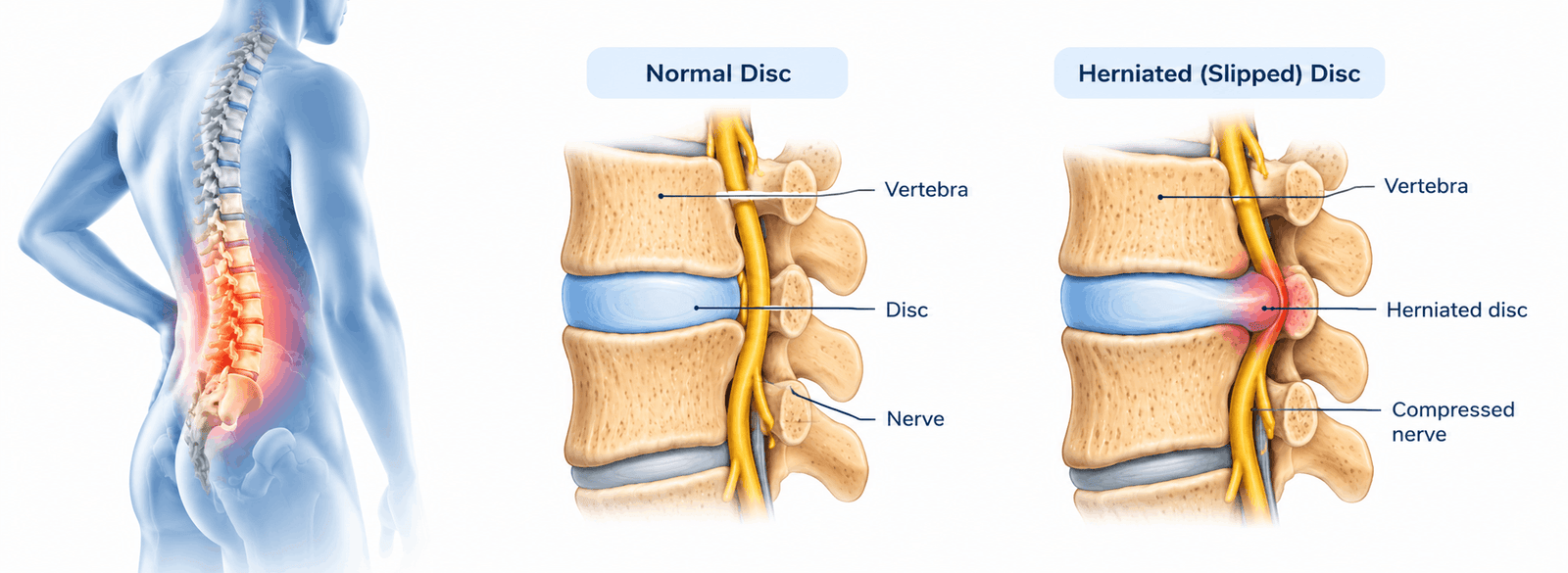 Your spine is made up of a series of small bones called vertebrae, with soft discs sitting between them. These discs act as cushions, helping absorb the pressure your spine takes throughout the day while allowing you to bend, turn, and move comfortably.
With age, repeated strain, or an injury, a disc may become weaker and develop a small tear. Part of the softer inner material can then push through the damaged outer layer. Doctors usually call this a herniated disc, although “slipped disc” is the term most people use. Not every disc problem causes symptoms, but problems may occur when the affected disc irritates or presses on a nearby nerve.
Slipped discs are most often found in the lower back, although they can also occur in the neck. The location of the affected disc helps determine where symptoms appear. This is why one person may experience pain in the lower back and leg, while another may notice symptoms around the neck, shoulder, or arm.
What Are the Symptoms of a Slipped Disc?
A slipped disc does not always cause noticeable symptoms. When it does, the discomfort may range from a mild ache to sharp pain that makes everyday movements uncomfortable. The symptoms also depend on where the disc is affected and whether it is putting pressure on a nearby nerve.
Common symptoms include:
- Back or neck pain: Pain may stay around the affected area and become worse with certain movements.
- Pain that travels: A compressed nerve may cause pain to spread from the back into the buttock and leg, or from the neck into the shoulder and arm.
- Numbness or tingling: You may notice a pins-and-needles sensation or reduced feeling along the affected nerve.
- Muscle weakness: The affected arm or leg may feel weaker, making activities such as walking, gripping, or lifting more difficult.
- Pain that worsens with certain activities: Bending, coughing, sneezing, or sitting for long periods may make the discomfort more noticeable in some people.
The symptoms can vary from person to person. If the pain persists, becomes worse, or is accompanied by new numbness or weakness, a proper evaluation can help determine whether a slipped disc or another spinal condition is responsible.
What Causes a Slipped Disc?
A slipped disc can develop gradually as the spine changes over time, but it may also occur after a sudden strain or injury. Often, several factors contribute rather than a single event causing the disc problem.
1. Age-Related Changes
As we get older, the spinal discs naturally lose some of their flexibility and water content. They may become less able to handle everyday stress and more likely to develop small cracks or tears. These changes are a common reason slipped discs develop.
2. Heavy Lifting
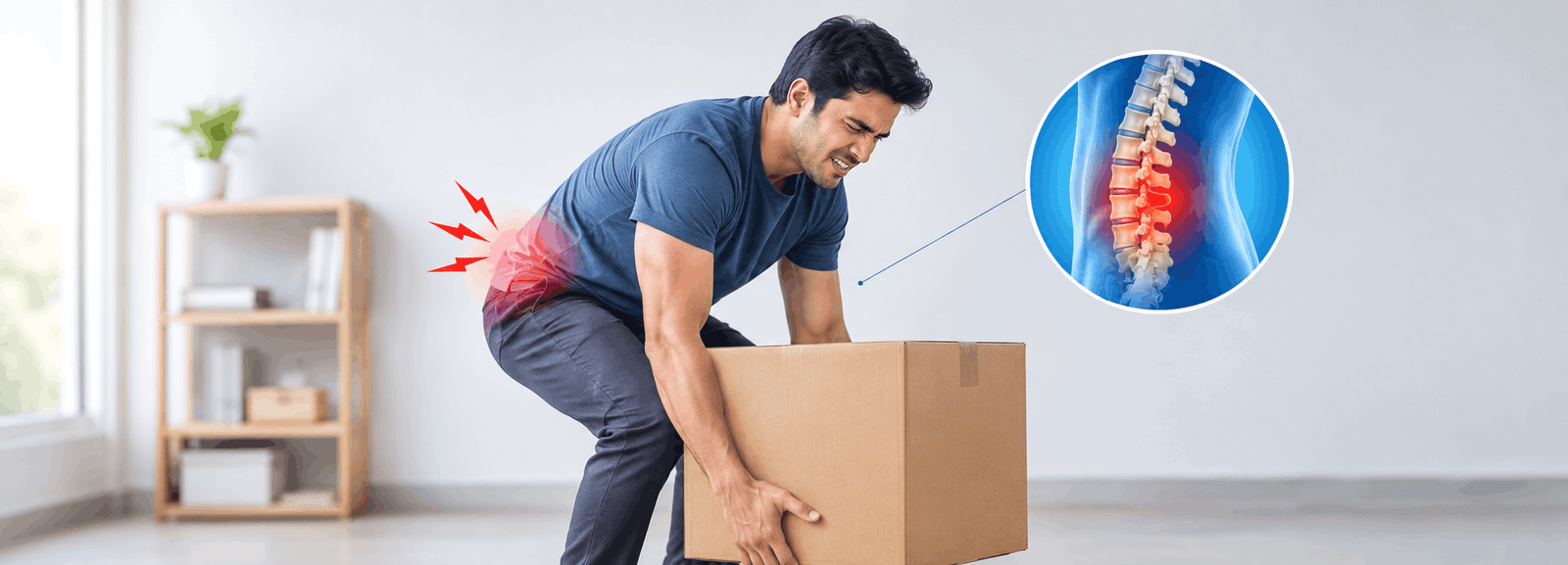 Lifting something heavy, especially with poor technique, can put considerable strain on the spine. Sudden twisting or turning while lifting may increase the strain on your spine. A disc that is already weakened may be more vulnerable to this type of stress.
3. Repeated Strain on the Spine
Your back goes through repeated movements during work, exercise, and everyday activities. Frequent bending, twisting, pushing, or pulling may place repeated stress on the discs. Over time, this may contribute to disc problems, particularly when the body does not get enough time to recover.
4. Prolonged Sitting
Spending long hours sitting, especially without regular movement, may contribute to back discomfort and stiffness. Poor sitting posture may also increase strain on the lower back. Sitting alone does not necessarily cause a slipped disc, but a largely inactive routine may affect overall spine health.
5. Previous Injury
A fall, accident, or other injury can damage a spinal disc and sometimes lead to herniation. You may notice the problem immediately after the injury or later as inflammation and irritation develop around the affected area.
6. Excess Body Weight
Carrying excess body weight may place additional stress on the spine, particularly the lower back. Over time, this extra load may contribute to disc-related problems.
How Is a Slipped Disc Diagnosed?
Finding the cause of back or neck pain usually starts with a conversation and a physical examination. A doctor will want to know when the pain began, what makes it better or worse, and whether you have noticed numbness, tingling, or weakness. Depending on your symptoms, your doctor may recommend further tests.
- Medical history: Your doctor will ask about your symptoms, previous injuries, daily activities, and how the pain is affecting your routine.
- Physical examination: The doctor may check your spine movements, muscle strength, reflexes, and sensation for signs of nerve irritation.
- MRI scan: An MRI provides detailed images of the spinal discs and nerves. It can help show whether a disc is herniated and whether it is pressing on a nerve.
- X-ray: An X-ray does not show a slipped disc itself, but it may help rule out other problems affecting the bones or spine.
- CT scan: A CT scan may be used in certain situations when more information about the bones or spine is needed, particularly when an MRI is not suitable.
Not everyone with back pain needs an MRI or other imaging test. The doctor decides which investigations are appropriate based on your symptoms and examination findings.
What Are the Treatment Options for a Slipped Disc?
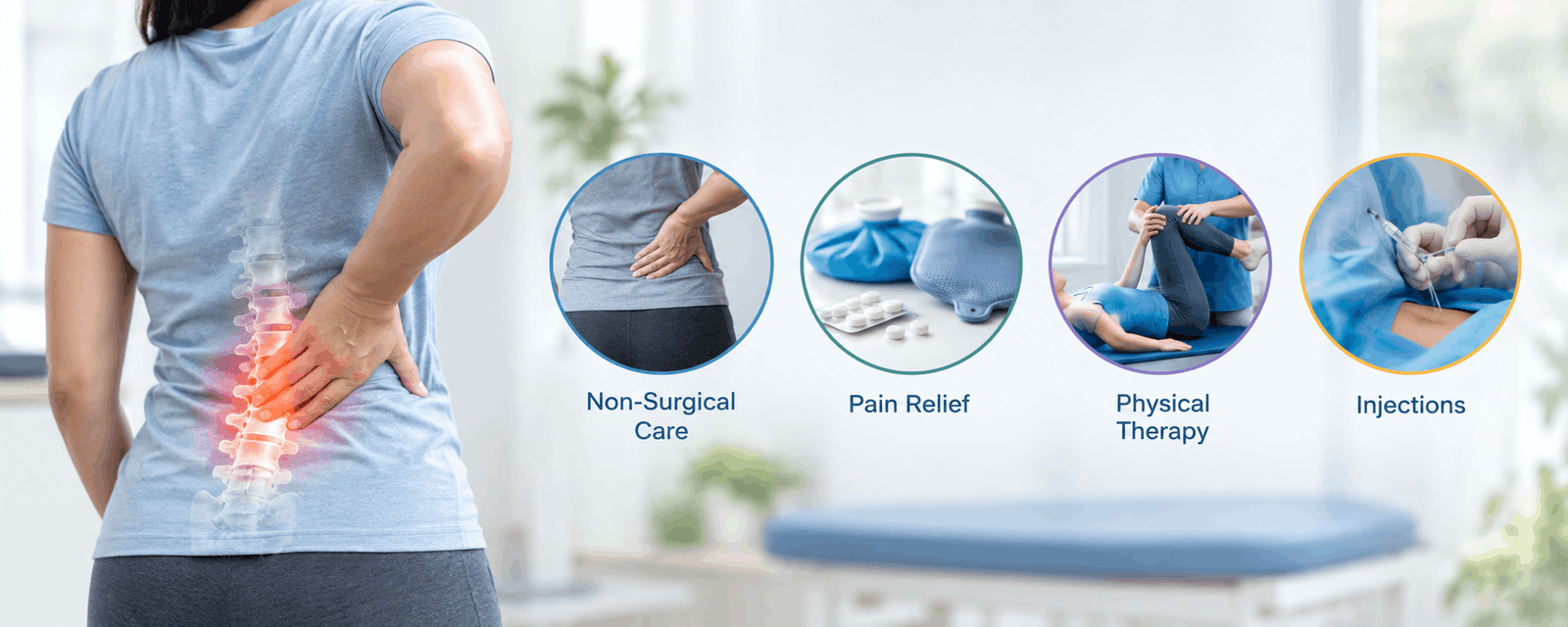 Treatment for a slipped disc depends on the severity of the symptoms, the location of the affected disc, and whether a nearby nerve is being irritated. Many people improve with non-surgical care, while others may need additional treatment if symptoms continue or become more severe.
Non-Surgical Care
When symptoms are manageable, treatment often begins without surgery. Your doctor may recommend staying gently active, avoiding movements that increase the pain, and making temporary changes to activities that put extra strain on the spine.
Pain Relief
Your doctor may recommend medicines to manage pain and inflammation, depending on your symptoms and overall health. Heat or cold therapy may also provide temporary comfort for some people. Pain medicines should be taken according to medical advice.
Physical Therapy
Once the pain becomes easier to manage, specific exercises may help improve flexibility and strengthen the muscles that support the spine. A physiotherapist can guide you through suitable movements and gradually increase activity as your symptoms improve.
Injections
If nerve-related pain continues despite initial treatment, your doctor may consider an injection around the affected nerve. It may help reduce inflammation and provide temporary pain relief. Your doctor can determine whether this treatment is suitable based on your symptoms and examination or imaging findings.
When Is Surgery Needed for a Slipped Disc?
Doctors do not usually recommend surgery as the first treatment for a slipped disc. It may be considered when symptoms continue despite appropriate non-surgical treatment or when the affected disc is causing significant nerve compression.
A spine specialist may discuss surgery when:
- Pain remains severe: Persistent pain continues to interfere with sleep, work, or everyday activities despite appropriate treatment.
- Weakness is getting worse: Increasing weakness in the arm or leg may indicate that the affected nerve is under significant pressure.
- Nerve symptoms continue: Persistent or worsening numbness, tingling, or other nerve-related symptoms may require further evaluation.
- Non-surgical treatment has not helped: Symptoms continue despite an appropriate course of treatment.
- There are serious nerve symptoms: Loss of bladder or bowel control or numbness around the inner thighs and genital area requires urgent medical attention.
The decision to operate is not based on an MRI finding alone. A spine specialist considers your symptoms, physical examination, imaging results, and how the condition is affecting your daily life before recommending surgery.
How Can You Prevent a Slipped Disc?
Not every slipped disc can be prevented, especially when it is related to natural changes in the spine. However, a few everyday habits may help reduce unnecessary strain on your back and support overall spine health.
- Use proper lifting techniques and avoid sudden twisting while lifting
- Stay physically active and include exercises that strengthen your back and core
- Take regular breaks if you spend long hours sitting
- Maintain a healthy weight to reduce extra pressure on your spine
- Avoid smoking, as it may affect spinal disc health
- Pay attention to your posture while sitting, standing, and working
Choosing the Best Doctor for Slipped Disc in Hyderabad
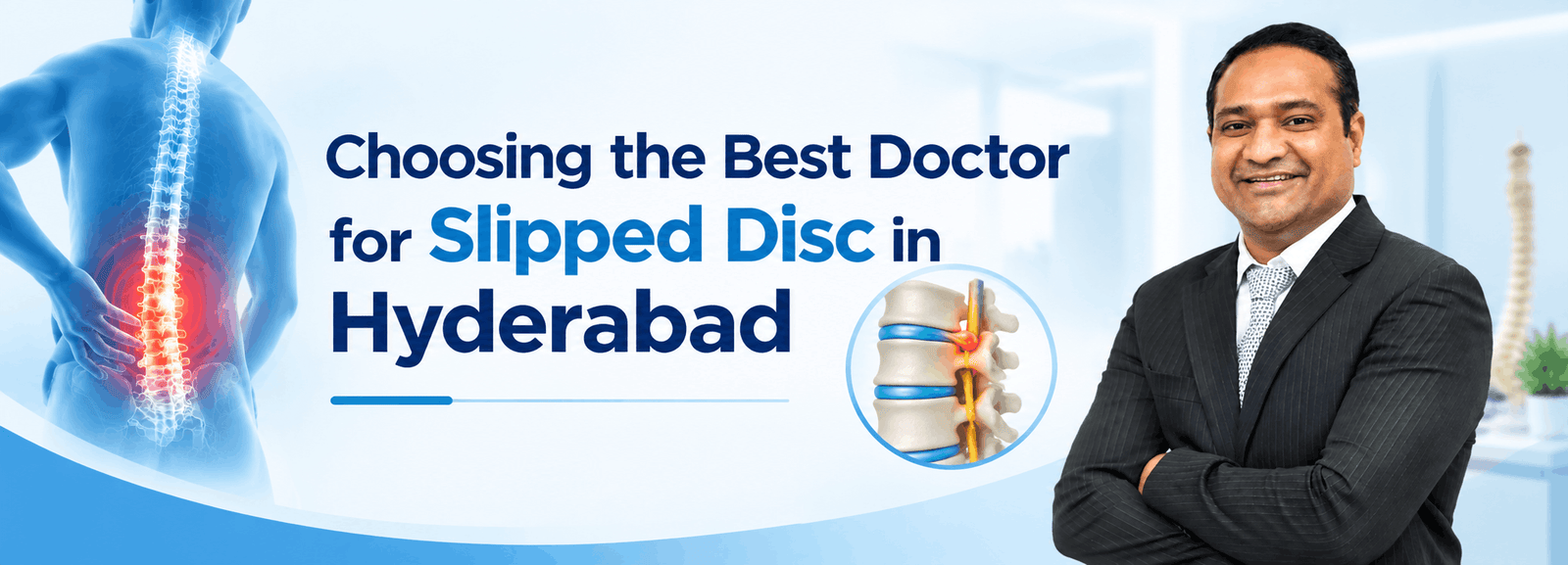 Choosing a doctor for a slipped disc depends on your symptoms, the location of the disc problem, and whether a nerve is affected. An orthopedic spine specialist can assess these factors and recommend suitable treatment based on your condition.
When consulting a doctor, it is useful to consider:
- Experience in treating spine and disc-related conditions
- Proper evaluation of pain, numbness, tingling, or weakness
- Use of imaging tests when needed
- Non-surgical treatment options before considering surgery
- Clear guidance about recovery and follow-up care
For persistent back or neck pain, pain spreading to the arm or leg, numbness, or weakness, Dr. Aravind Gandra, an orthopedic spine surgeon in Hyderabad, can evaluate the condition and recommend appropriate treatment.
Frequently Asked Questions
1. Can a slipped disc heal on its own?
Yes, many slipped discs improve with non-surgical treatment and time. Recovery varies depending on the severity of the disc problem and whether a nerve is affected.
2. How do I know if my back pain is caused by a slipped disc?
Back pain alone does not always mean you have a slipped disc. Pain that travels into the leg or arm, along with tingling, numbness, or weakness, may indicate nerve irritation. A doctor can evaluate your symptoms and decide whether further tests are needed.
3. Is walking good for a slipped disc?
Gentle walking is often encouraged when it does not increase your symptoms. Staying in bed for long periods may make it harder to return to normal activities. Your doctor or physiotherapist can guide you on suitable activity levels.
4. How long does it take to recover from a slipped disc?
Recovery varies from person to person. Some people improve within a few weeks, while symptoms may take longer to settle in more persistent cases.
5. Does a slipped disc always require surgery?
No. Surgery is not usually the first treatment for a slipped disc. It may be considered when symptoms continue despite non-surgical treatment or when significant nerve compression is present.
6. Can a slipped disc cause permanent nerve damage?
A slipped disc may cause nerve problems when a nerve remains compressed or becomes severely affected. Worsening weakness, loss of bladder or bowel control, or numbness around the inner thighs and genital area requires immediate medical attention.
7. Who is the best doctor for a slipped disc in Hyderabad?
An orthopedic spine specialist can diagnose and treat slipped disc problems. Dr. Aravind Gandra is an orthopedic spine surgeon in Hyderabad who treats spine-related conditions, including slipped discs.
8. Where can I get treatment for a slipped disc in Hyderabad?
Patients with slipped disc symptoms can consult Cure Super Speciality Ortho & Clinic in Hyderabad for evaluation and appropriate treatment.
Conclusion
A slipped disc may cause back or neck pain, along with symptoms such as pain spreading to the arm or leg, numbness, tingling, or weakness. The symptoms may vary depending on the location of the affected disc and the nerve involved.
Many people improve with appropriate non-surgical treatment, including pain management, physical therapy, and a gradual return to normal activities. Surgery may be considered when symptoms continue despite treatment or when significant nerve compression is present.
If your pain persists or starts affecting your daily activities, getting it evaluated can help identify the cause and guide suitable treatment. Dr. Aravind Gandra at Cure Super Speciality Ortho & Clinic provides care for patients with slipped discs and other spine-related conditions.