Chronic knee pain can affect daily activities such as walking, using the stairs, and standing for long periods mainly in adults. The knee replacement surgery may be needed when the non surgical treatments like physiotherapy or medications fail to relieve.
The robotic knee replacement surgery has been enhanced by technology, to help orthopedic surgeons to perform the operation. This surgery has some advantages and limitations and the results of the procedure vary from person to person .
Knowing the procedure, its advantages and limitations, and recovery process is important to the patients. In this guide,you will understand how robotic knee replacement surgery works, who needs it, its pros and cons and choosing the right doctor for the treatment.
What is Robotic Knee Replacement Surgery?
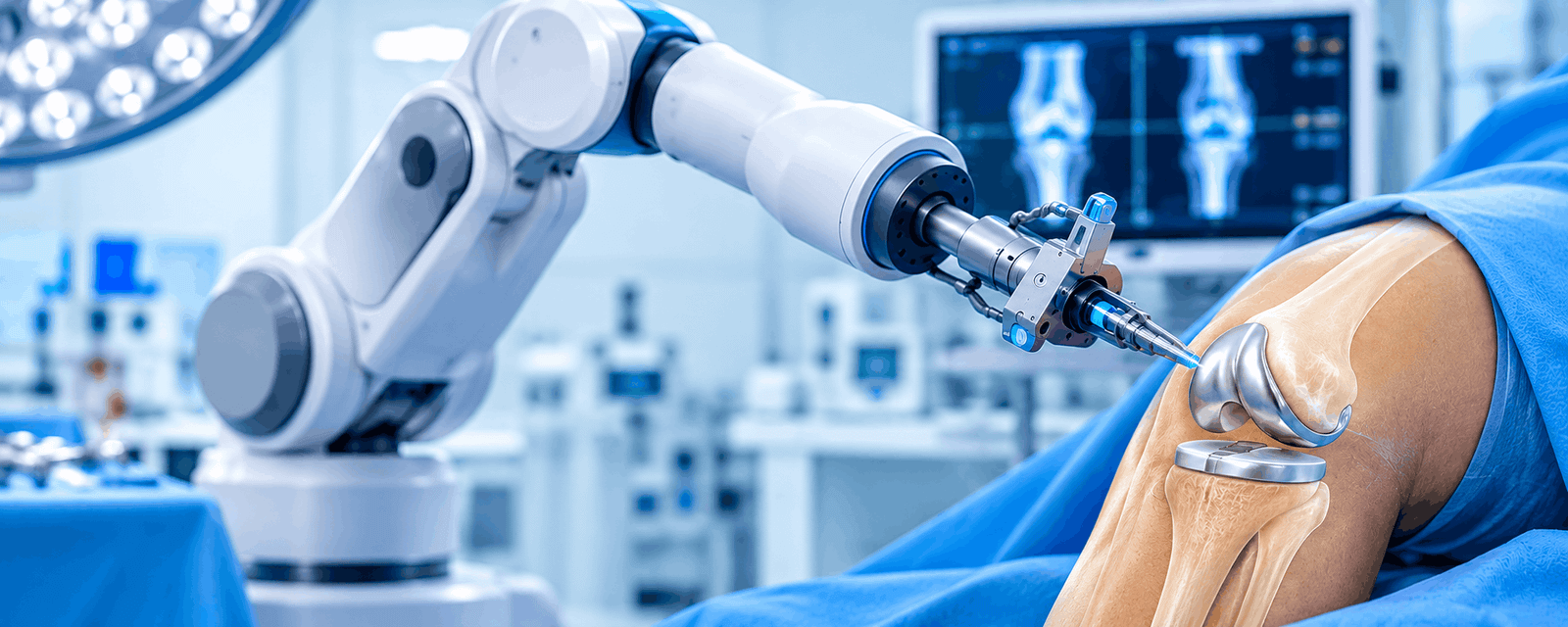 Robotic knee replacement surgery is a type of operation where an orthopedic surgeon uses computer-guided robotic technology for planning and performing the replacement of the affected parts of the knee joint. This helps surgeons assess the knee structure and plan the correct angles for more precise surgery.
Though having “robot” in its name, the device does not perform the surgery automatically. The surgeon controls all the process of the operation and uses robotic technology as assistance to the procedure .
The primary goal for the surgeons is to replace the affected joints with artificial components while maintaining proper knee alignment and balancing the surrounding soft tissues. It can reduce the pain and enhance the joint functioning properly.
Why is Robotic Knee Replacement Surgery Needed?
The knee joints can be damaged due to aging, osteoarthritis, rheumatoid arthritis, injuries, or other joint problems. Due to the breakdown of the cartilage that cushions the bones inside the knee.
Some symptoms that patients may experience:
- Constant knee pain
- Swelling and stiffness
- Difficulty walking
- Reduced flexibility
- Trouble climbing stairs
- Pain while standing or sitting
In many cases, non-surgical treatments such as medications, physiotherapy, injections, can give temporary relief. However, as the pain increased it became difficult to walk and discomfort in daily routines the doctors can suggest knee replacement surgery for the patients.
The doctor chooses the procedure like robotic Knee Replacement Surgery as an option and according to the patient’s symptoms.
Pros and Cons of Robotic Knee Replacement Surgery
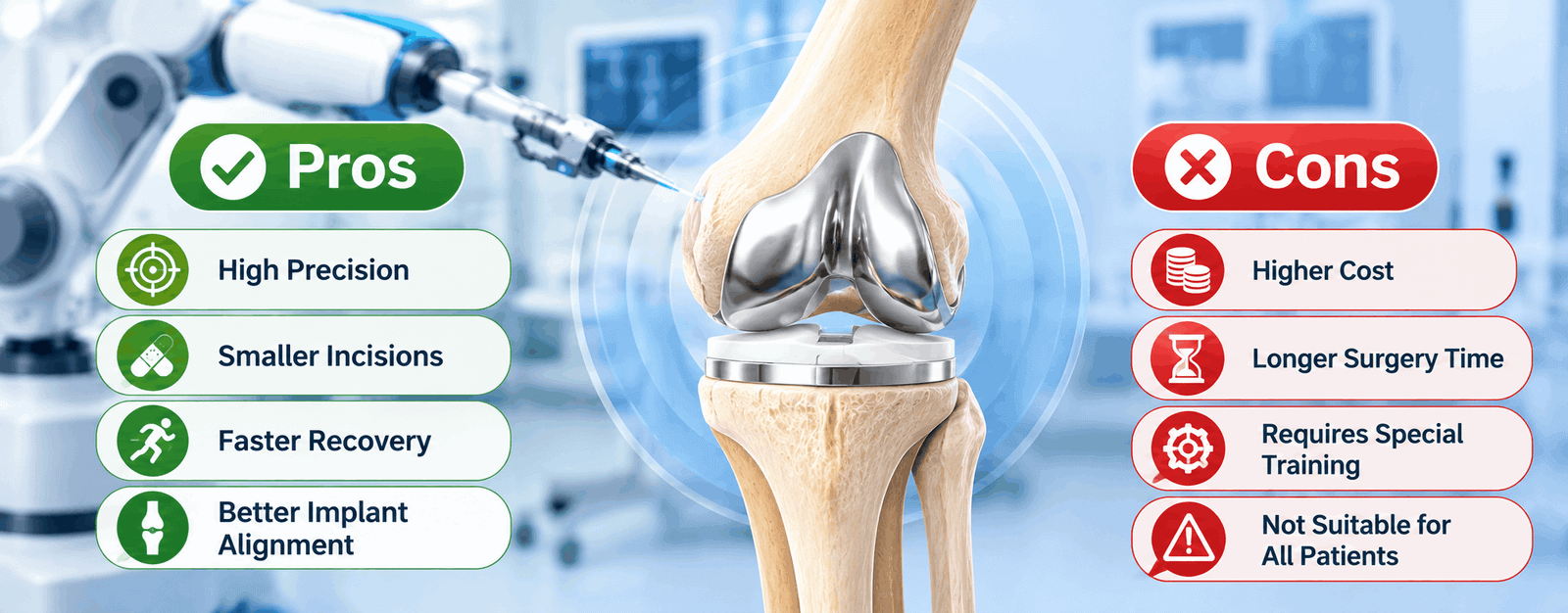 There are some benefits of robotic knee replacement surgery concerning surgical planning and implant placement. However, it also has limitations, including higher costs and specialised equipment. The patients should know both sides of the surgery so that they can get an idea about the treatment and can discuss it with an orthopedic surgeon.
Pros of Robotic Knee Replacement Surgery
- Improved Accuracy: Robotic technology helps surgeons perform the procedure more accurately.
- Personalized Planning: The surgery is based on the patient’s knee structure and joint conditions.
- Better Implant Positioning: Proper implant placement can improve the performance of joint stability, comfort and the lifespan of the implant itself.
- Reduced Damage to Healthy Tissue: Robotic assistance prevents damage to healthy bone and surrounding tissue, as a result swelling and pain can be reduced.
- Faster Recovery Potential: Some patients report that they started walking quickly and had shorter hospital stays, and easier rehabilitation periods.
- Improved Knee Function: After recovery, many patients have better mobility and balance in the joints.
- Enhanced Patient Confidence: Advanced technology and detailed surgical planning increases the patients confidence.
Cons of Robotic Knee Replacement Surgery
- Higher Cost: This surgery is expensive because of advanced technology, and specialized equipment.
- Limited Availability: Not all hospitals offer robotic-assisted knee replacement surgery, especially in smaller cities or healthcare centers.
- Technology Dependence: The procedure relies on robotic systems and software, which require proper functioning and calibration during surgery.
- Longer Pre-Surgical Planning: The surgery has additional scans for better planning of the procedure.
- Recovery Still Takes Time: The recovery varies from person to person.
- Requires Experienced Surgeons: The success of robotic-assisted surgery depends heavily on the surgeon’s expertise and experience with robotic systems.
- General Surgical Risks Still Exist: Some risks may occur in this surgery like swelling, blood clots and infection.
Recovery Journey After Robotic Knee Replacement Surgery
Recovery after this surgery happens slowly. Most patients start moving and walking after the procedure. However, the time needed to regain strength and mobility varies depending on age, overall health, and rehabilitation progress.
1. First 24-48 Hours After Surgery
The first two days after the surgery the doctor monitors the leg if it has swollen, pain and checks movement of the leg. The patient will take small steps with a walker with the doctor’s guidance.
2. First 1-2 Weeks
In this duration, the patient slowly increases the walking distance and continues the knee exercises. Swelling and discomfort are common in this stage, following the instructions and attending the appointments are important.
3. Weeks 3-6
As the knee starts healing, patients work on improving flexibility, muscle strength, and walking ability. Physiotherapy plays an important role in helping them return to routine activities. Some patients may gradually reduce their dependence on walking aids.
4. After 6 Weeks
Patients can see improvement in their joints and they can walk long distances. They can do their daily activities such as walking and other tasks, depending on their recovery.
5. Long-Term Recovery
Recovery takes months and the muscles become strong and enhanced in joints which the patient can walk and have better movement. Following the prescribed medicines and regular check ups and maintaining healthy weight can support the long term recovery.
Choosing the Right Doctor for Robotic Knee Replacement Surgery
 The success of robotic knee surgery depends on the patient’s knee health and symptoms, including the surgeon’s experience. Choosing the right orthopedic surgeon is an important step before undergoing the procedure.
Patients should consider the following factors when selecting a surgeon:
- Experience in Knee Replacement: For the surgery choose a doctor with years of experience in joint treatments.
- Training in Robotic-Assisted Surgery: Look for a surgeon with appropriate training and experience in using robotic-assisted surgical systems.
- Clear Explanation of Treatment Options: The surgeon should explain clearly about the treatment, including benefits, risks and recovery.
- Post-Surgical Care: Proper follow-up appointments and guidance on physiotherapy are important for monitoring recovery and improving knee movement.
For patients considering knee replacement treatment, Dr. Aravind Gandra provides orthopedic consultation to assess their condition and discuss suitable treatment options.
Choosing the Right Hospital for Robotic Knee Replacement Surgery
Choosing the right hospital plays an important role in the overall treatment and recovery journey.
Patients should look for hospitals that offer:
- Advanced robotic technology
- Experienced orthopedic teams
- Modern surgical facilities
- Strong rehabilitation and physiotherapy support
For robotic-assisted orthopedic care and joint replacement treatment, Cure Super Speciality Ortho & Clinic, Chanda Nagar, provides specialized orthopedic and rehabilitation services focused on patient recovery and mobility.
Frequently Asked Questions (FAQs)
1. Is Robotic Knee Replacement surgery better than traditional knee replacement ?
Robotic Knee Replacement Surgery offers improved precision, personalized surgical planning, and better implant positioning compared to traditional surgery. However, the best option depends on the patient’s condition and the surgeon’s expertise.
2. How long does recovery take after Robotic Knee Surgery?
Most patients start walking within a day after surgery, but complete recovery may take a few weeks to several months depending on age, health condition, and rehabilitation progress.
3. Is Robotic Knee Replacement Surgery painful?
Some pain and discomfort are normal after surgery, but many patients experience manageable pain levels and improved mobility during recovery with proper physiotherapy and medication.
4. What Are the Disadvantages of Robotic Knee Surgery?
It has a few limitations, such as higher costs, longer surgery time in some cases, and limited availability. It also requires specialised training for surgeons. While it helps improve surgical precision, it does not guarantee better results for every patient.
5. How do I choose the best doctor for Robotic Knee Replacement Surgery?
Patients should choose an experienced orthopedic surgeon who specializes in robotic-assisted knee replacement and has expertise in joint replacement procedures and post-surgery rehabilitation.
For advanced orthopedic care, many patients consult Dr. Aravind Gandra for robotic-assisted knee replacement treatment.
6. Which hospital is best for Robotic Knee Replacement Surgery in Chanda Nagar?
When choosing a hospital, patients should look for advanced robotic technology, experienced orthopedic specialists, and strong rehabilitation support.
For robotic-assisted orthopedic care and joint replacement treatment, Cure Super Specialty Hospital offers specialized orthopedic and rehabilitation services focused on patient recovery and mobility.
Conclusion
Robotic knee replacement surgery is an advanced technology for knee joint damage, with benefits such as detailed surgical planning and improved precision in implant positioning. However, it is important to understand that robotic assistance does not guarantee faster recovery or better results for every patient.
The right treatment depends on the knee damage and the overall health. Understanding the procedure, its potential benefits, limitations, and recovery requirements can help patients make informed decisions.
Dr. Aravind Gandra provides orthopedic consultation for patients experiencing knee pain and considering joint replacement. Patients can consult him at Cure Super Speciality Ortho & Clinic, Chandanagar, Hyderabad, to discuss their condition and available treatment options.